
Case file 01Product design
Invofi
AI-driven invoicing & automated payments for Nigerian SMEs, bridging the 20-day payment gap.
Open in the office →The same case file, inside my interactive office
In shortSole designer on an AI invoicing MVP for Nigerian small businesses. Onboarding drop-off fell 25% and design-to-dev handoff got 30% faster.
- SSituation
- Small businesses in Nigeria lose time and cash flow to invoicing. Writing one invoice by hand took about 15 minutes, and then came chasing the payment.
- TTask
- I was the only designer on Invofi’s AI invoicing MVP, from user mapping to the Figma system. I worked with Invofi’s product and development teams, and the developers built from my system.
- AAction
- I let the AI pull line items out of uploaded documents, put what you’re owed first on the payments screen, fixed onboarding before adding features, and built reusable components for the developers.
- RResult
- Onboarding drop-off fell 25% and design-to-development handoff got 30% faster. People tested the two-minute invoice, and it worked.
- Client
- Invofi (AI invoicing startup)
- Category
- Product design
- Role
- Lead UI/UX designer, the only designer
- Team
- Me, working with Invofi’s product and development teams
- Timeline
- Apr – Aug 2025
- Platform
- Web app (desktop and tablet)
- Tools
- Figma design system, AI tools for faster iteration
Small businesses in Nigeria lose cash flow to admin. Writing an invoice by hand took about 15 minutes: line items, VAT, terms. Then came chasing the payment. Invofi’s bet was simple. If AI does the typing and payment is one link away, owners invoice sooner and get paid sooner. I was the only designer, from user mapping to the Figma system the developers built from.
SStage 1Situation
TStage 2Task: my part
01My part
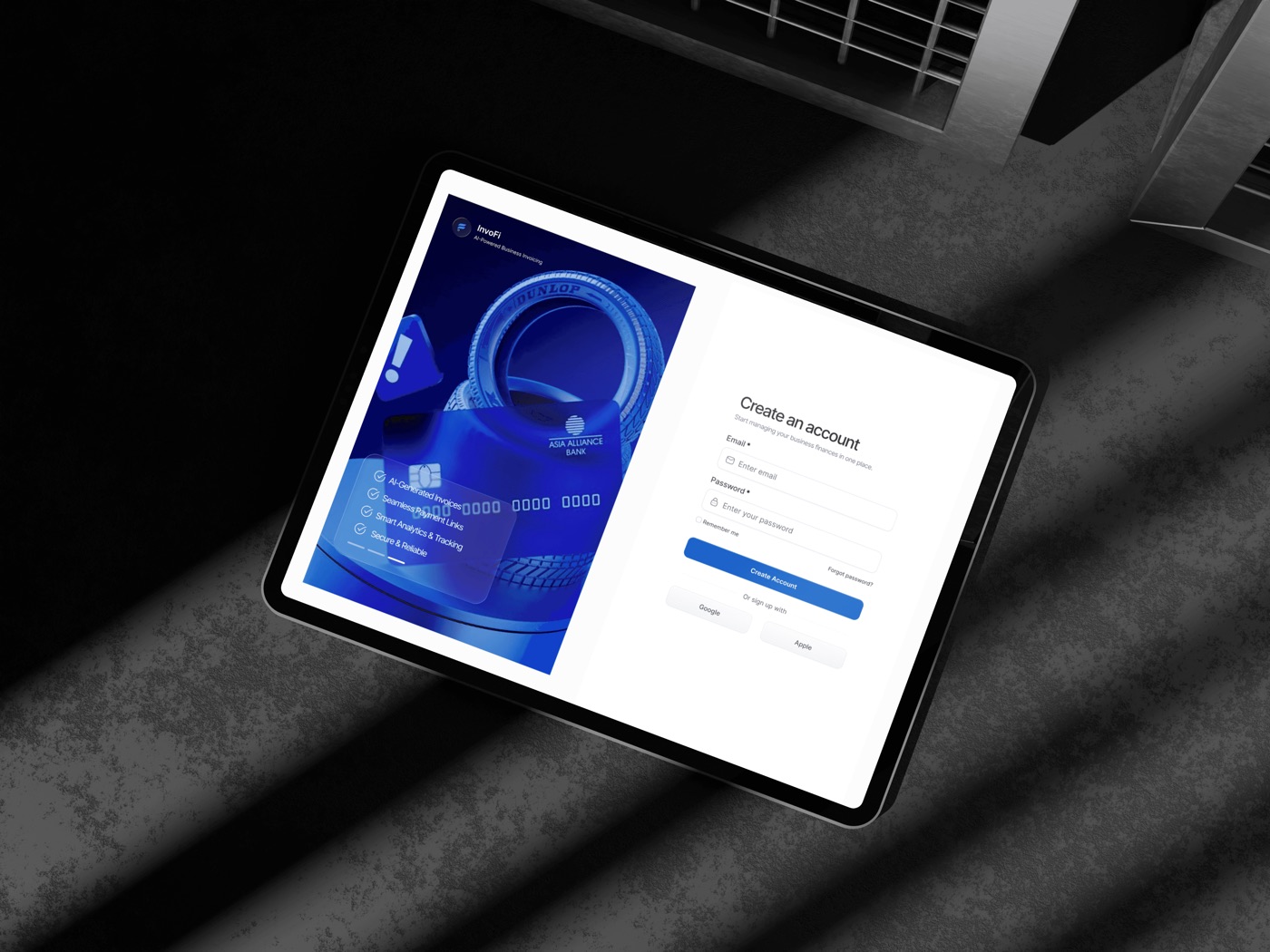
I was the only designer. I mapped who signs up and where they get stuck, reworked onboarding, designed the AI home, invoicing and payments, and built the components in Figma. I worked with product and engineering so every screen could be built as drawn.
AStage 3Action: the decisions
02Decision 1 · Let the AI do the typing
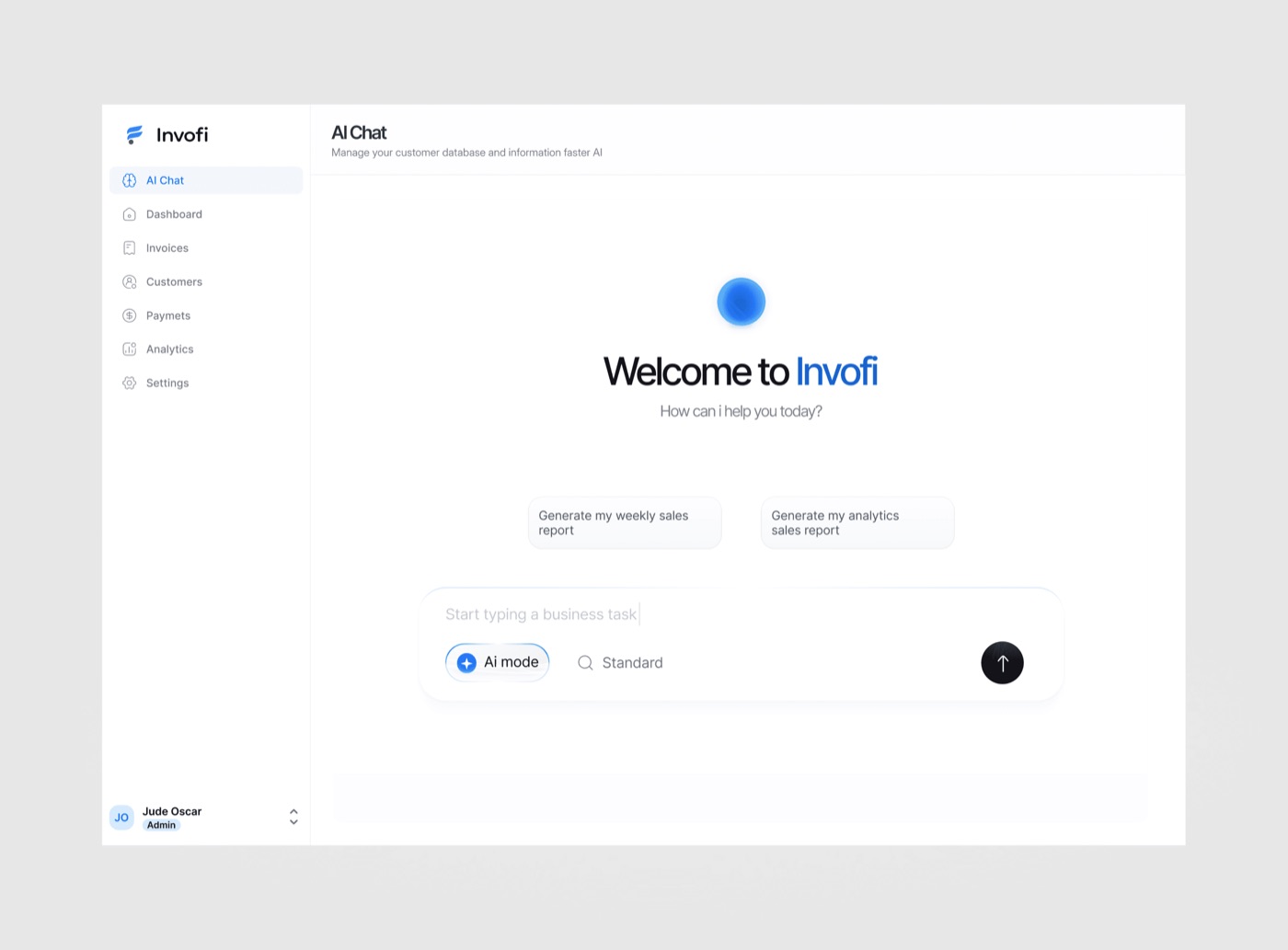
Manual entry was the slow part, so I replaced the form. You upload a brief or a contract, and the system pulls out the line items, VAT and terms. That is what makes the two-minute invoice possible. It also removes hand calculation, and the errors that come with it.
03Decision 2 · Put what you’re owed first
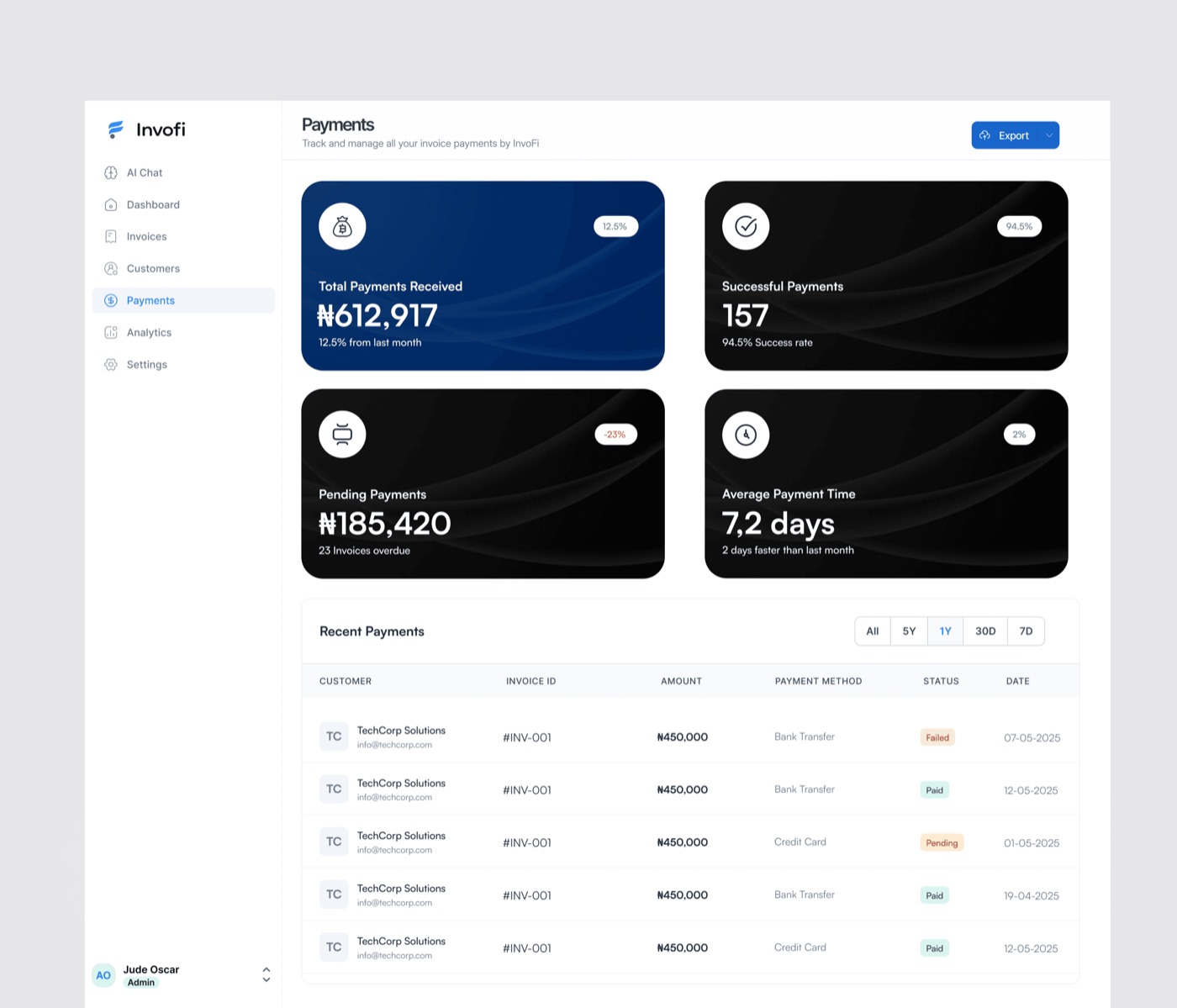
In invoicing, clarity is cash. The payments screen leads with four numbers: received, successful, pending and average days to pay. Overdue invoices are flagged, so the next action is obvious. Every invoice carries an embedded payment link, so the customer can pay from the invoice itself.
04Decision 3 · Fix onboarding before adding features
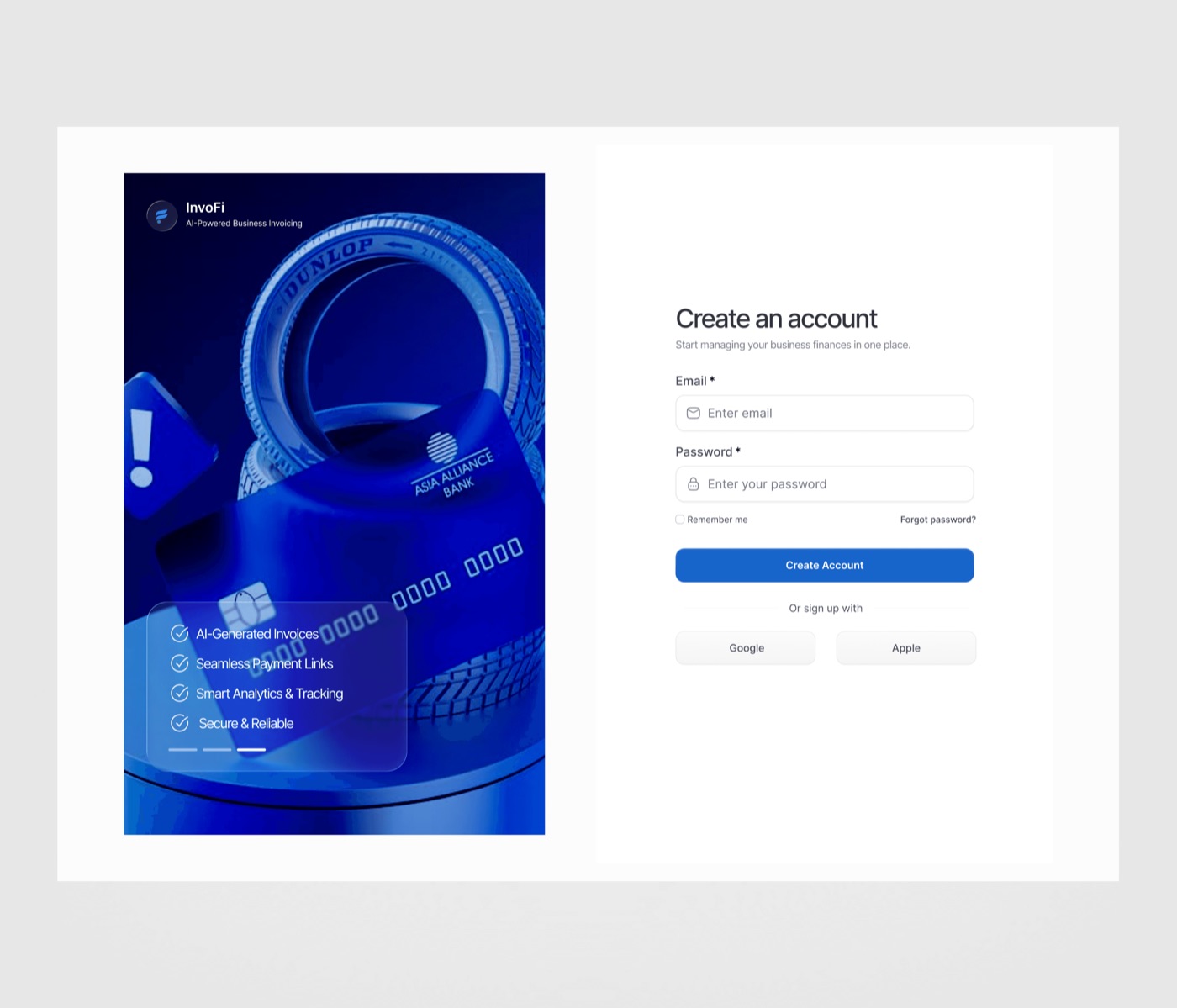
An invoicing tool is worthless to someone who quits at sign-up. I mapped the people signing up and the problems they hit, then reworked the onboarding flow. Drop-off fell by 25%.
05Decision 4 · A system the developers could build from
I built the screens from reusable Figma components and used AI tools to iterate faster. Developers got the same parts every time instead of one-off screens. Handoff from design to development got 30% faster.
RStage 4Result
- −25%Onboarding drop-off, after I reworked the flow
- −30%Design-to-development handoff time, with a shared Figma system
- < 2 minTime to create an invoice, down from about 15, and it held up when people tested it
The first two were measured during the project. The two-minute invoice was tested with people.
06Result
Onboarding drop-off fell by 25% after the rework, and design-to-development handoff got 30% faster with the shared Figma system. People tested the two-minute invoice, and it worked.